






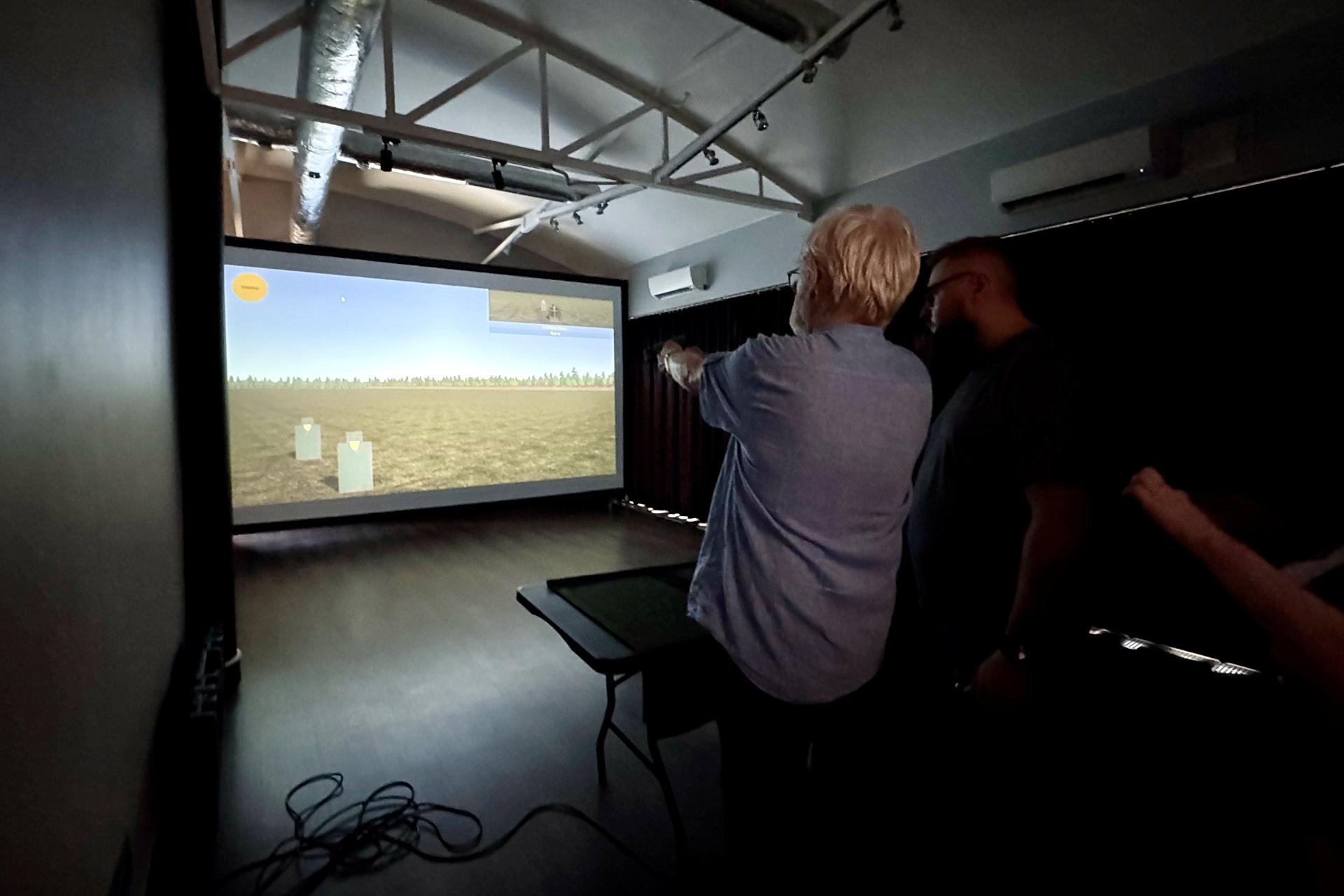
Before You Fire Your First Shot
A first encounter with shooting often looks quite similar.
Someone persuades us to visit a shooting range. An instructor explains the basic safety rules, we are handed a firearm, fire a few—or a few dozen—rounds, and leave with our heads full of emotions.
For many people, this is exactly how their interest in shooting begins.
The thing is, such an experience really answers only one question: what does it feel like to fire a shot?
It does not yet answer whether shooting could be the right hobby for us.
Because shooting is about much more than simply pulling the trigger.
But who said you have to start at a shooting range?
Your first encounter with the world of firearms does not necessarily have to mean firing your first shot.
You can start with a conversation. With a class on firearm safety. By learning the basic principles behind different firearm designs. With a course. By visiting a gun shop without any intention of buying anything and asking questions that may seem obvious to an outsider, but are a perfectly natural starting point for you.
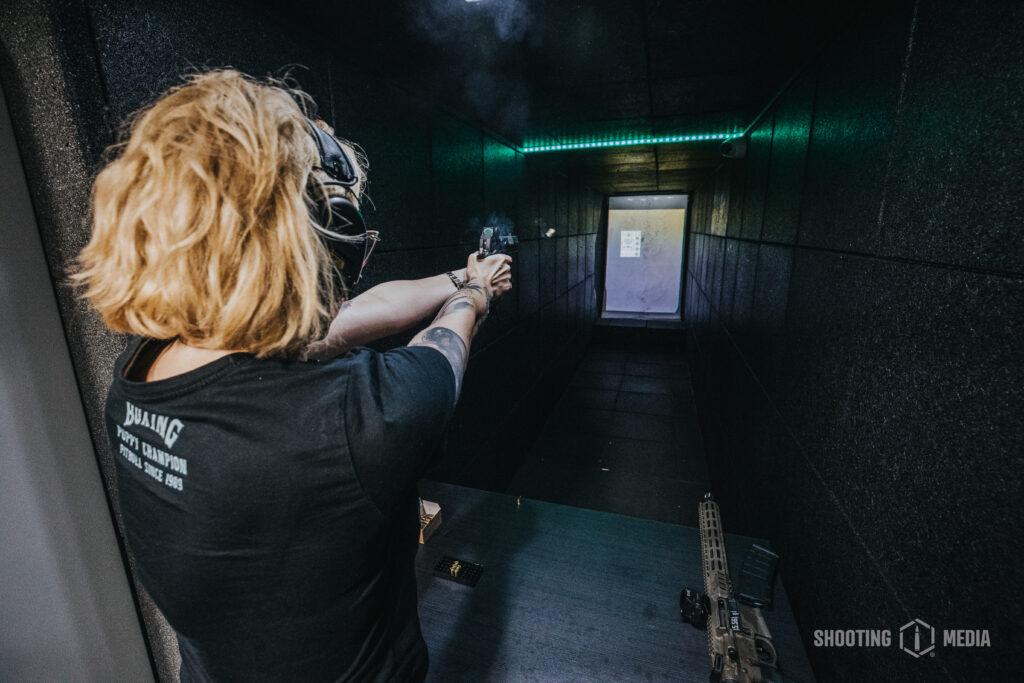
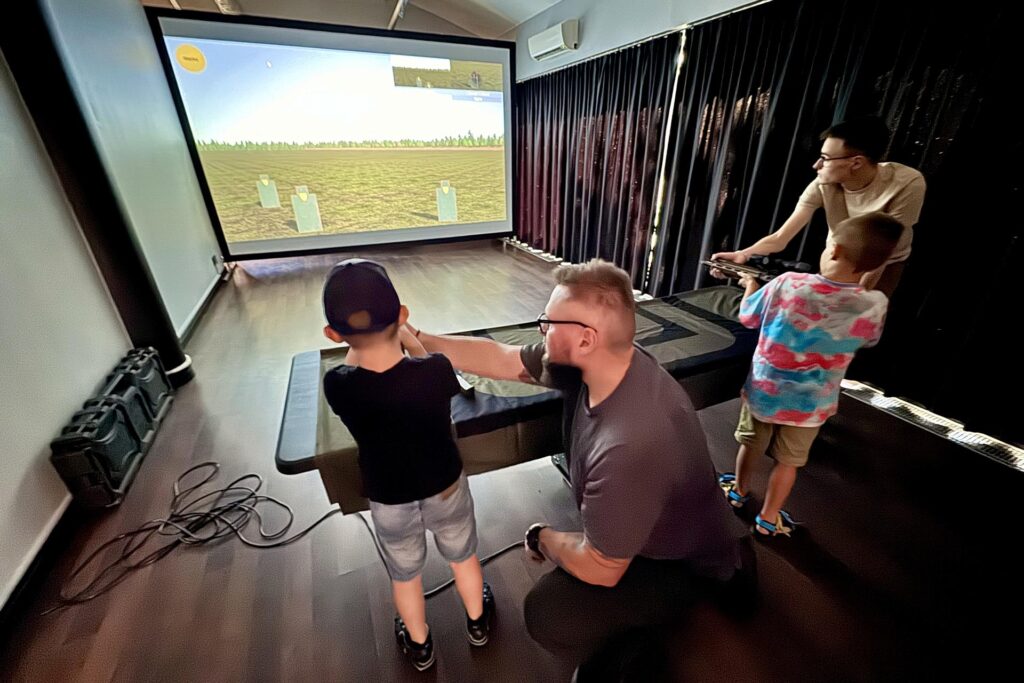
You can also begin with modern training systems.
Systems such as Mantis allow you to practise certain aspects of firearm handling even at home, while more advanced solutions available at CSJ, such as VR or Pojedynek, demonstrate that training, competition and learning do not have to involve live ammunition and a shooting range from the very beginning.
For some people, this may actually be a better way to start.
First, understand the rules.
See how the equipment works.
Become familiar with its ergonomics.
Begin to grasp the fundamentals.
And only then visit a shooting range.
When does curiosity begin to turn into a hobby?
Some of the people behind CSJ today know this process from a completely different world.
Years ago, during a family trip, we tried scuba diving with an instructor. It was new, interesting and intriguing enough that, once we returned home, we decided to take a diving course.
Only then did we realise how little that first experience had told us about the hobby as a whole.
Diving was no longer simply about going underwater. It became about safety, physiology, equipment, procedures and emergency scenarios. Later came trips, a club and the people.
The community became so important that it also included people who had never dived themselves but simply enjoyed being around those who did.
Many of those friendships lasted longer than the diving itself.
And that is probably where one of the greatest values of a good hobby lies.
Shooting is very similar.

What if it is not really about the firearm itself?
From the outside, the most visible elements are the firearm, the target, the noise and the moment the shot is fired.
Only later do you begin to discover how many different paths there are to follow within this world.
Some people are drawn to dynamic shooting.
Others to precision.
Some begin competing, while others become interested in the history of firearm designs, mechanics, ballistics or collecting.
Some people spend more time configuring their firearms than actually shooting them. They change the grip, optics, trigger, stock, finish or other components simply because they enjoy tuning and personalising their own equipment.
Do they really need all those changes?
Probably not.
But a motoring enthusiast does not have to race on a track to enjoy building a car.
A hobby does not always need a practical justification.
It simply has to bring satisfaction and make us want to learn more.
That is why the path of “a few shots—a firearms licence—a first gun” is not always the best way to enter this world.
Of course, you can take a course, pass the examinations, complete the formalities and buy your first pistol.
But the excitement of owning something can fade surprisingly quickly.
And then the question appears:
“All right. What next?”
The answer is usually hidden in everything that was not yet visible at the beginning.
Knowledge.
Developing skills.
Equipment.
History.
Competition.
Trips.
People.
And does every shooting range offer the same experience?
Definitely not.
This is another thing that is difficult to notice during a first, casual visit.
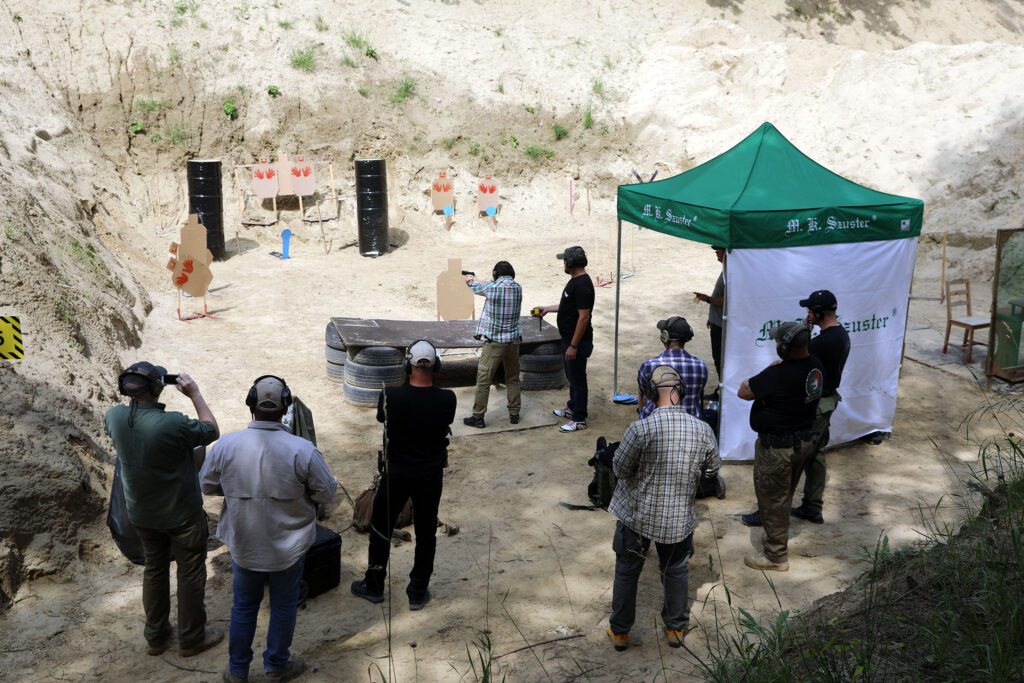
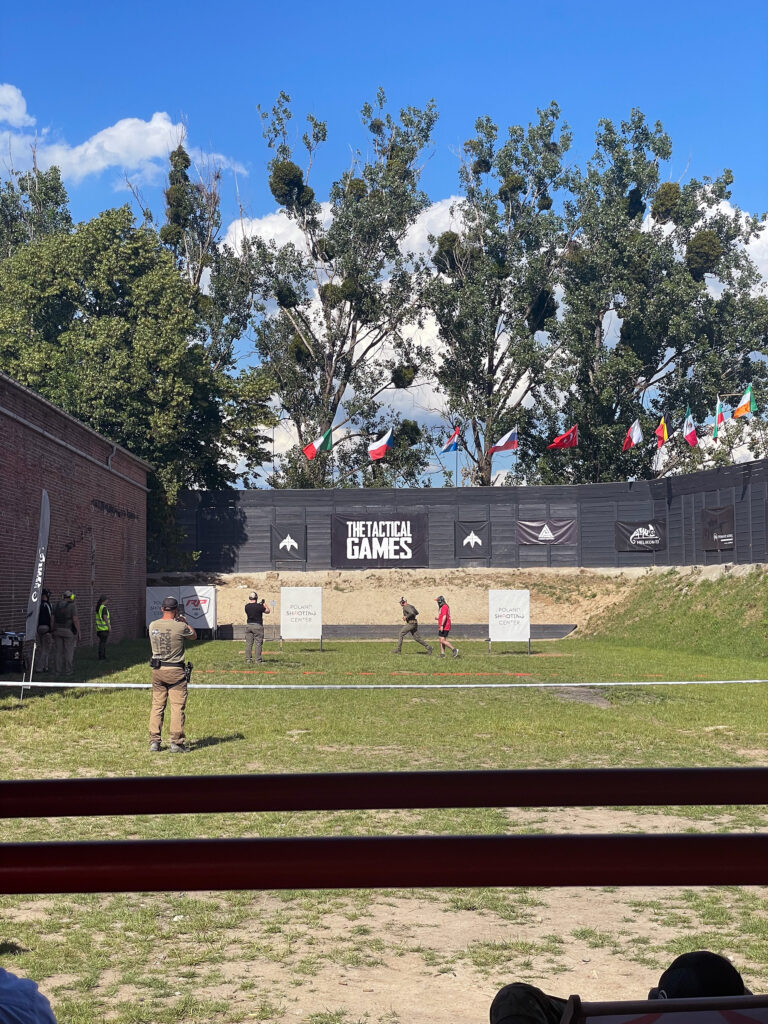
An indoor range offers a different experience from an outdoor facility.
A static firing line is something completely different from a dynamic shooting stage.
A kill house, scenario-based training or the opportunity to shoot at longer distances offer yet another kind of experience.
That is precisely why it is worth avoiding the habit of staying in just one place.
Explore different facilities.
Different instructors.
Different training methods.
Different rules and different forms of shooting.
This is important to us as well.
We work with a number of facilities and want not only to use them ourselves, but also to take our customers, trainees and people connected with CSJ there.
Because anyone who genuinely wants to explore this world should see more than one firing line and one way of shooting.
Perhaps you simply need a hobby that gets you out of the house?
This is one of the less obvious advantages of shooting.
Today, an increasingly large part of life can be lived through a screen.
We work online. We meet online. We shop online. We talk through social media and then relax in front of yet another screen.
Shooting is a little different.
You can spend hours watching videos, reading forums and learning the theory. But sooner or later, you have to get up.
Go to a shooting range.
Attend a training course.
Visit a shop.
See a gunsmith.
Take part in a competition.
And meet people face to face.
This is also important to us in the way we are building CSJ.
A significant part of the space has been set aside not for storage or back-of-house facilities, but for welcoming people. We have even created places where visitors can sit down and have a coffee or a glass of water.
We do not sell those drinks.
From a purely commercial perspective, you might therefore ask why we use valuable space for this purpose.
For us, the answer is simple.
Someone comes to collect equipment, someone leaves a firearm for servicing, someone finishes a training session, and someone else drops in simply to ask a question.
When people can sit down, talk, exchange experiences or meet someone new, that is when a real community begins to form.
Not just a social media profile.
Not just an online forum.
Real relationships.

And it does not have to be a hobby only for adults
Shooting can also be explored together with children and young people, naturally in an appropriate form and with a strong emphasis on safety.
The point is not that every child should one day become a shooter.
The point is that, just like motoring, sailing or diving, it can be another subject that a parent discovers together with their child.
We have previously written in more detail about whether introducing young people to firearms means making them comfortable with violence.
Our approach remains simple:
knowledge should replace assumptions, and education should build responsibility.
What if you do not want to own a firearm at all?
That is perfectly fine too.
You do not have to become a shooter for it to be worthwhile learning something about this world.
Firearms evoke strong emotions, and it is very easy to judge them from the outside.
Sometimes, all it takes is for a friend to obtain a firearms licence before they hear:
“Why do you need a gun? Who are you planning to shoot?”
Someone who knows even a little about this world might respond differently:
“So, you got into it? What exactly attracted you?”
Dynamic shooting?
Precision?
Collecting?
History?
Technology?
Or perhaps the people more than the shooting itself?
We do not want to persuade anyone by force.
You can explore shooting and still say:
“This is not for me.”
That is also a perfectly good answer.
But it is best when it comes from knowledge and experience rather than from stereotypes alone.
Many passions are similar in this respect.
From the outside, we mainly see their most distinctive element. Only after looking a little deeper do we begin to notice the people, the knowledge, the rules, the culture and the reasons why someone might want to remain part of that world for years.
Diving is not only about going underwater.
Motoring is not only about driving.
And shooting really is not only about firing a gun.
So before you decide that you want to become a shooter—or before you conclude that you simply cannot understand the people who do—it is worth getting to know this world a little better.
Perhaps it will draw you in.
Perhaps it will not.
But at least you will know why.
