






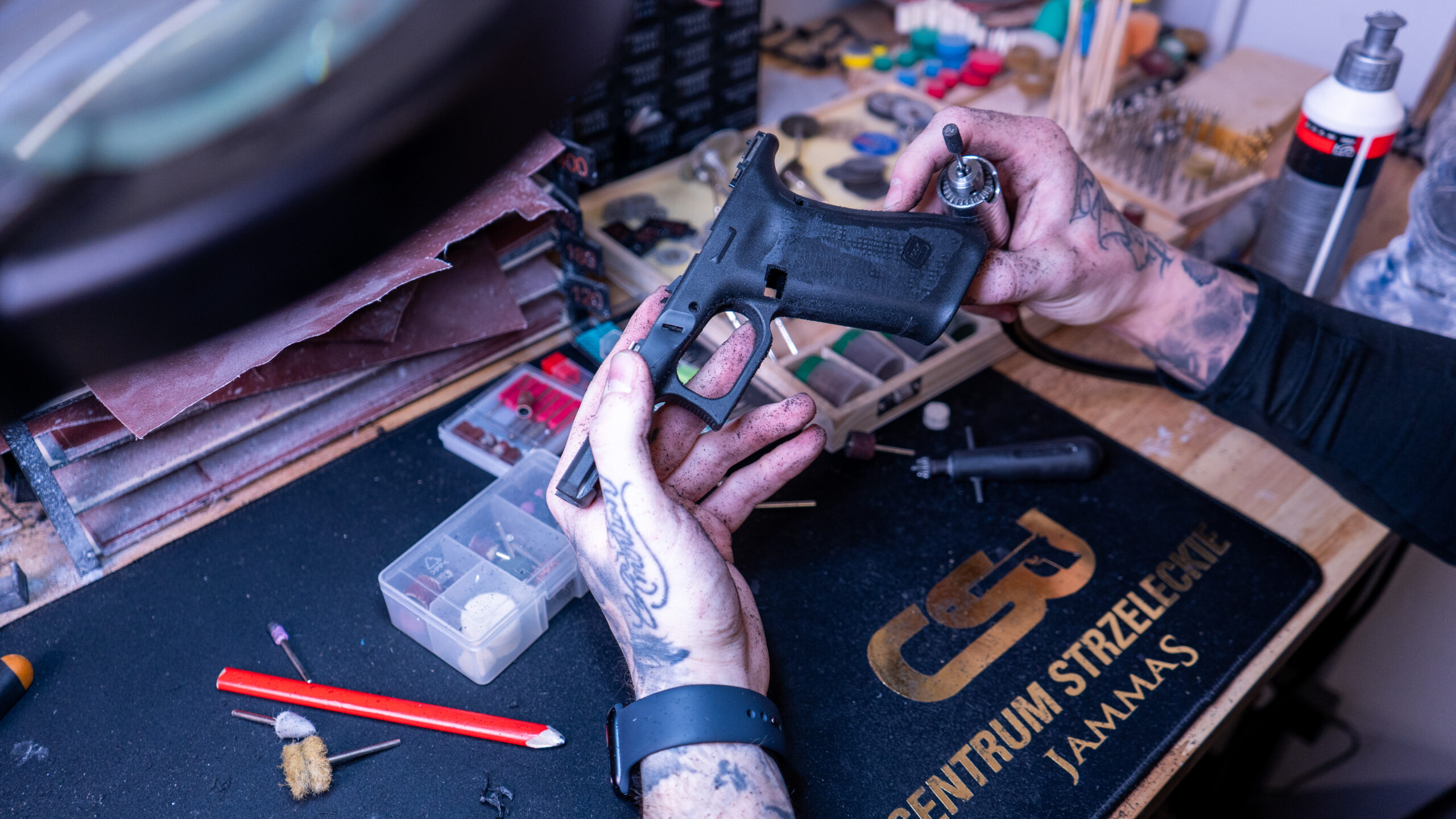
Firearm Stippling – Improving Pistol Grip and Ergonomics
Stippling is one of the most commonly performed modifications in modern gunsmith workshops.
It involves permanently texturing the pistol grip, allowing the firearm to sit more securely in the hand and providing greater control during shooting—especially in dynamic scenarios.
More and more shooters—both competitive and recreational—are choosing pistol grip stippling to improve ergonomics, grip consistency, and overall training comfort.
In our gunsmith workshop, we offer both classic texturing and more advanced modifications, such as thumb rests, trigger guard undercuts, and custom contact surface adjustments tailored to the shooter’s hand.
In this article, we explain:
- what firearm stippling is
- what benefits it provides
- who this modification is for
- which parts of the grip can be improved
What is pistol stippling?
Stippling is the process of permanently texturing the surface of a firearm’s grip—most commonly on pistols with polymer frames.
It is performed using a thermal tool that locally melts the material, creating a controlled, non-slip texture.
The result is a surface that significantly improves hand traction—even in demanding conditions.
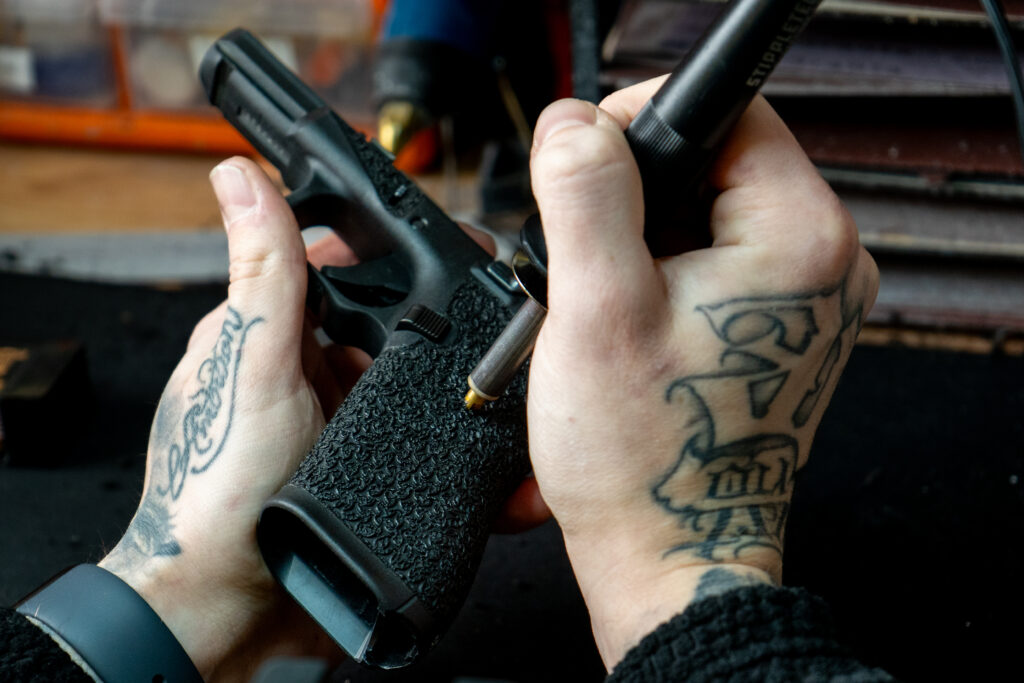
Stippling is most commonly applied to pistols such as:
- Glock
- CZ
- Walther
- Sig Sauer
- Canik
- Smith & Wesson
In other words, any firearm built on a polymer frame platform.
Unlike adhesive grip tapes or rubber sleeves, stippling is a permanent modification—it does not peel off, wear out, or lose its properties over time.
Why consider stippling your pistol grip?
The primary goal of stippling is to maximize control over the firearm—especially during fast shooting and high-pressure situations.
During intense training or competition, hands become sweaty and the grip can start to shift. In those moments, the difference between a factory frame and a properly stippled grip becomes immediately noticeable.
Grip texturing significantly enhances traction and stability.
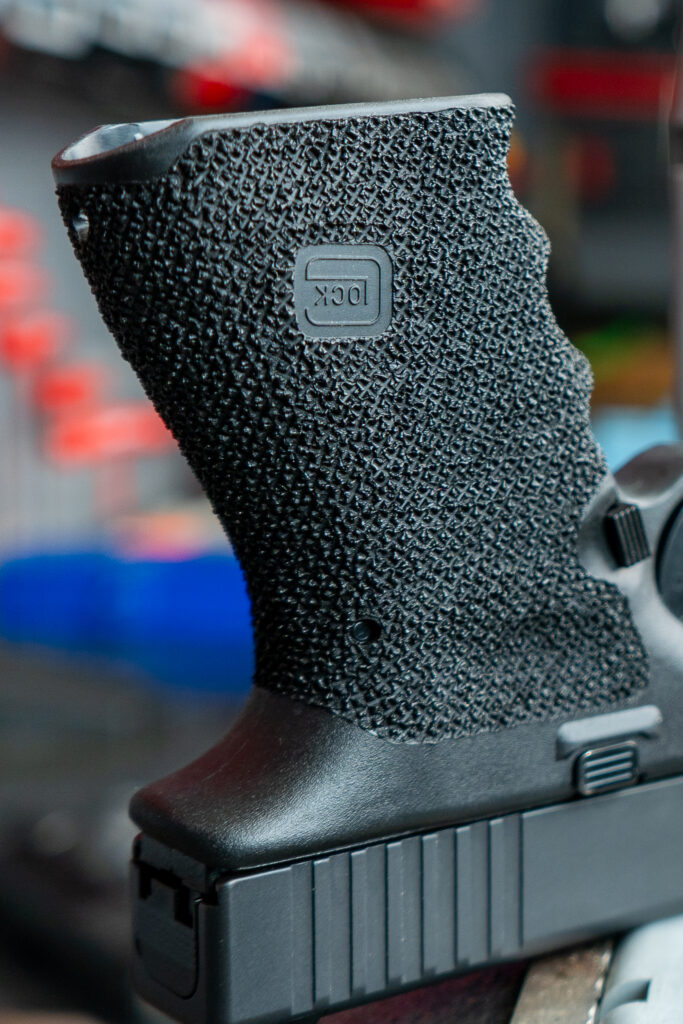
Key benefits of stippling
1. Improved recoil control
The textured surface increases friction between the hand and the firearm, reducing movement during recoil.
2. Faster target reacquisition
A more stable grip allows better control of muzzle rise and quicker return to target.
3. Secure grip in all conditions
Stippling improves control:
- with sweaty hands
- during dynamic shooting
- while wearing gloves
- in adverse weather conditions
4. Custom fit to the shooter
When combined with additional grip modifications, the firearm can be tailored to the shooter’s hand anatomy and shooting style.
What grip modifications can be done with stippling?
Stippling is often combined with additional gunsmith work that significantly improves ergonomics.
Grip texturing
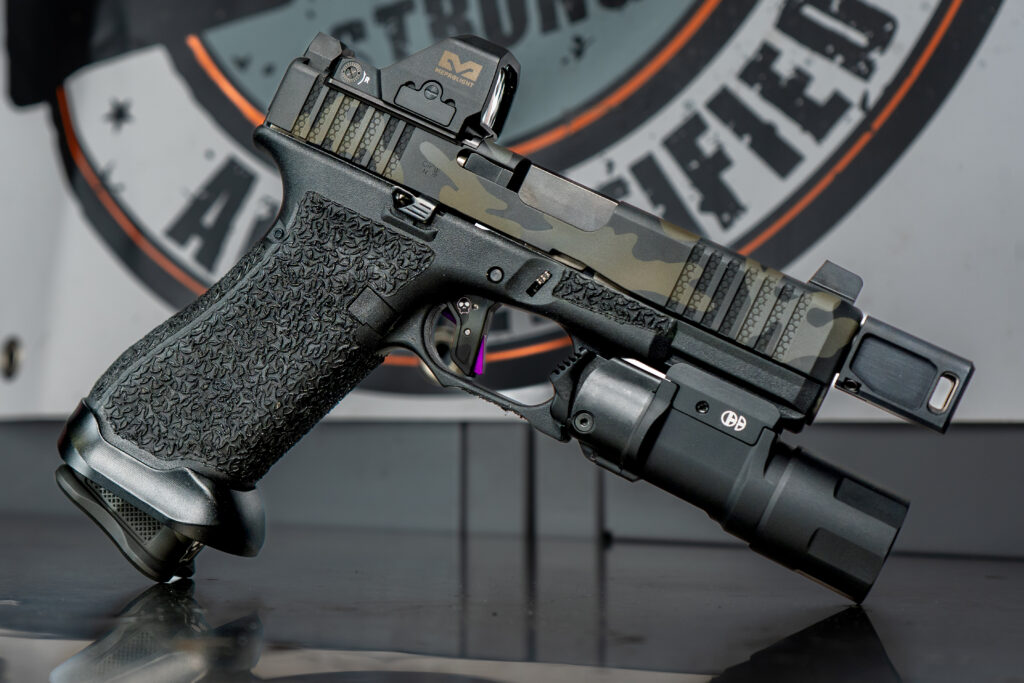
The basic service includes texturing:
- the front strap
- the backstrap
- the side panels
This results in a more stable grip that does not shift during firing.
Thumb rest / thumb index
This is a dedicated textured area on the frame that indicates the optimal placement for the support-hand thumb.
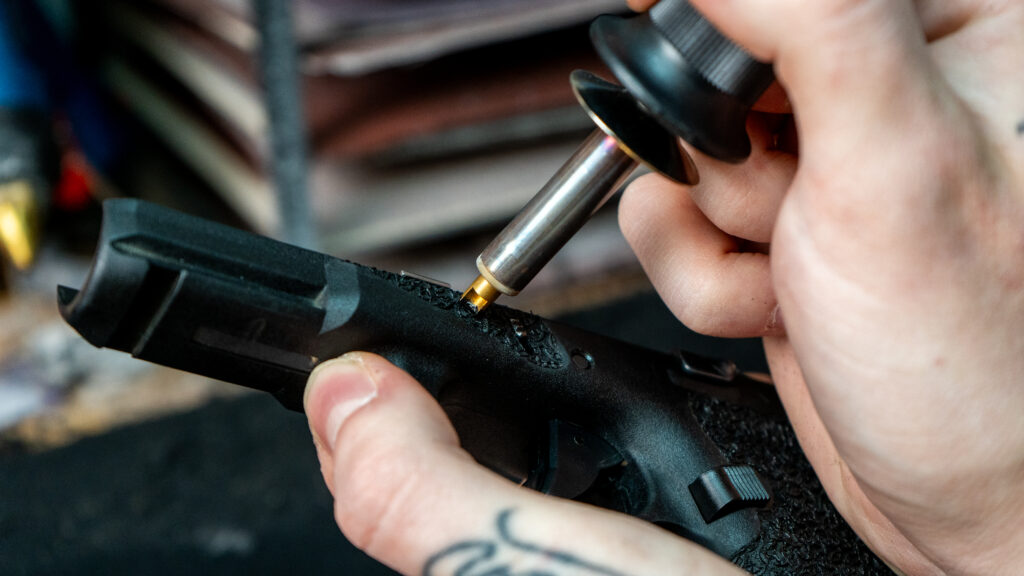
It provides:
- more consistent grip positioning
- greater control over the firearm
- improved pistol tracking
Trigger guard undercut
The trigger guard undercut involves modifying the area where the trigger guard meets the shooter’s hand.
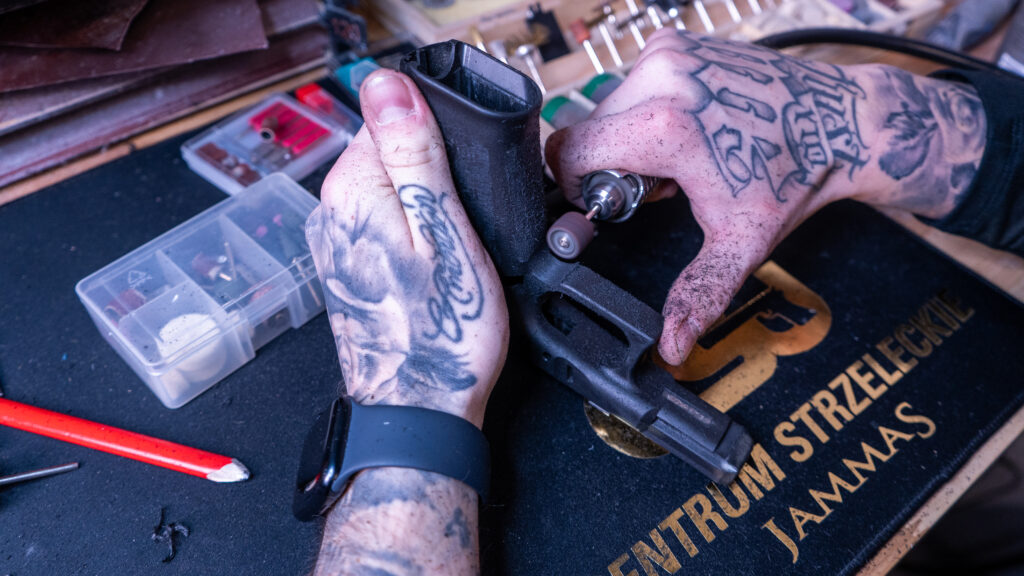
Benefits include:
- a higher grip on the pistol
- improved recoil control
- a more comfortable hand position
This is one of the most common modifications performed alongside stippling.
Does stippling weaken the firearm?
Properly executed stippling does not negatively affect the durability of the firearm.
The key factors are the gunsmith’s experience and correct technique. In professional work, the modification is superficial and does not interfere with the structural integrity of the frame.
However, poorly executed stippling can weaken the polymer structure—this is why such modifications should always be entrusted to a qualified gunsmith.
Who is stippling for?
Stippling is especially popular among shooters who train regularly and demand maximum control over their firearm.
It is most commonly chosen by:
Competitive shooters (IPSC, IDPA)
A secure grip is critical for speed and shot consistency.
Recreational and training shooters
Even after a few sessions, the improvement in control and comfort becomes noticeable.
Personal defense users
In high-stress or adverse conditions, a reliable grip can be crucial.
Shooters seeking better fit
Grip modifications allow the firearm to be tailored to individual hand anatomy.
FAQ – frequently asked questions about stippling
Is stippling durable?
Yes. It is a permanent modification performed directly on the frame, so it does not wear out like grip tape.
Can stippling be removed?
Not fully. Reversing the modification is very difficult and usually requires replacing the affected part.
Does stippling improve accuracy?
It does not directly affect the firearm’s mechanics, but improved control leads to better shot consistency.
Is stippling suitable for all firearms?
It is most commonly applied to polymer-framed pistols. Metal firearms require different grip enhancement techniques.
What determines the cost of stippling?
The price depends on the scope of work—from basic texturing to advanced ergonomic modifications and custom designs.
Stippling in our gunsmith workshop
In our workshop, we offer a full range of stippling services—from standard grip texturing to advanced ergonomic modifications.
Our services include:
- grip texturing
- thumb rest
- trigger guard undercut
- custom hand contact zones
Each project is executed individually—no two stippling jobs are identical.
This allows us to tailor the firearm precisely to the shooter’s preferences and style.
Want to improve your grip?
If you’re looking for better control, greater consistency, and improved shooting comfort—get in touch with us.
We’ll help you choose the right solution and deliver a modification tailored to your needs.
